
 Transorbital Surgery Book


Transorbital Surgical Simulation Model
A life-size, anatomically accurate 3D model designed for hands-on transorbital endoscopic and skull base surgical training. Its interchangeable orbital components allow surgeons to explore complex orbital and skull base anatomy, practise surgical approaches and simulate procedures involving the sphenoid sinus and middle cranial fossa. Transparent and solid orbital modules, including options with integrated soft tissue and Sternberg canal defects, support anatomical teaching and practical surgical simulation.
The Transorbital Surgical Simulation Model is a life-size, modular anatomical model developed for teaching and practising transorbital endoscopic and skull base surgical approaches. Its interchangeable orbital components provide detailed views of the bony orbit, orbital fissures, optic canal and surrounding skull base anatomy, with configurations designed for both anatomical demonstration and hands-on surgical simulation.
The model enables surgeons to explore the greater and lesser sphenoid wings, anterior clinoid process and anatomical relationships relevant to accessing the middle cranial fossa, cavernous sinus, Meckel’s cave and temporal lobe. It also demonstrates the orbital and intracranial relationships of cranial nerves III, IV, V₁–V₃ and VI, together with anatomy relevant to transorbital approaches to Sternberg canal defects.
Developed in close collaboration with Professor Darlene Lubbe, a specialist in endoscopic sinus, transorbital and skull base surgery, the model combines detailed anatomical representation with a practical design suited to surgical education, anatomical demonstration and skills workshops.
The modular system is available in several configurations, from individual orbital components to a comprehensive surgical simulation kit with interchangeable orbits, mounting accessories and a carrying case.


TR33-FK
Transorbital Surgical Simulation Model Full Kit
Includes all transorbital products: cranium and flesh with rotatable mount, 3 clear orbits with and without Sternberg Canal defects, 4 flesh and bone surgical simulation orbits, A4 plate with rim, navigation headband, set of 3 orbital retractors, carry bag.
R60 000 / $3 550 /
£2 660 / €3 050

TR33-CF-SSB
Cranium with flesh and solid orbit for surgical simulation
The base structure with replaceable solid orbit for surgical simulation
R25 700 / $1 520 /
£1 140 / €1 310

TR33-SBSS-3
Surgical Simulation Orbital Segments
Features well-pneumatised sphenoid sinuses with integrated soft-tissue structures and bone for surgical simulation. Available in packs of three.
R21 000 / $1 200 / £900 / €1040

TR33-SBSS
4. Solid orbit – Surgical Sim
Features well-pneumatised sphenoid sinuses with integrated soft-tissue structures for surgical simulation
R7 000 / $400 / £300 / €350

TR33-SC
1. Transparent orbit – Normal
Transparent orbit featuring normal sphenoid anatomy
R2 400 / $135 / £110 / €120

TR33-SC/SC
2. Transparent orbit – Sternberg Canal defect
Features well-pneumatised sphenoid sinuses with Sternberg Canal defect
R2 400 / $135 / £110 / €120

TR33-SCF/SC
3. Transparent full orbit – Sternberg Canal defect
Features well-pneumatised sphenoid sinuses with Sternberg Canal defect and integrated soft-tissue structures
R7 000 / $400 / £300 / €350

TR33-CF
Cranium with flesh
The base structure into which the modular orbits fit. Also available without the flesh.
R17 360 / $994 / £746 / €860

TR33-CF-SCF
Cranium with flesh and clear full orbit
Includes cranium with flesh and clear FULL orbit with normal sphenoid bone
R24 360 / $1 394 /
£1 046 / €1 200

TR33-BAG
Padded carry bag
Custom-designed to fit the full Transorbital Surgical Simulation Model kit, with padded sides for protection and two strap options for convenient carrying.
R750 / $43 / £33 / €37

TOR-3
Training orbital retractors
Set of three stainless steel retractors – 8mm, 12mm and 16mm – for use in transorbital and skull base surgical training.
R750 / $45 / £34 / €41
How to place an order
Orders for the Transorbital Surgical Simulation Model and related items should be directed to us via email or Whatsapp, along with your delivery address and postal code so that we can calculate delivery costs and send you a quotation.
Note: The ZAR (rand) price is pegged. Dollar, Euro and Pound Sterling may change slightly depending on currency fluctuations.
Making payment
We prefer payment via direct bank transfer (our banking details will be provided with your quote or invoice). If a bank transfer is not possible, we will email you a secure payment link so you may pay via PayFast or PayPal.
Transorbital Surgical Simulation Model features
Interchangeable orbital components
Four orbital components are available, which can be purchased individually, or as a set. The orbital components are as follows:
1. A transparent orbital module, based on normal sphenoid bone anatomy, providing an anatomically accurate reference for patient education and medical training.
2. A transparent orbital module, based on DICOM images from a patient with well-pneumatised sphenoid sinuses, providing an anatomically accurate reference for patient education and medical training, specifically to illustrate transorbital access to the sphenoid sinus in patients with Sternberg canal defects.
3. A solid orbital module based on normal sphenoid bone anatomy with integrated soft-tissue structures, including the rectus muscles and cranial nerves III, IV, V₁–V₃ and VI, designed for hands-on surgical simulation, including transorbital endoscopic procedures through the superior and lateral transorbital portals.
4. A solid orbital module, based on DICOM images from a patient with well-pneumatised sphenoid sinuses with integrated soft-tissue structures, including the rectus muscles and cranial nerves III, IV, V₁–V₃ and VI, designed for hands-on surgical simulation, including transorbital surgery to repair Sternberg canal defects.
Cranium and soft-tissue covering (flesh)
The cranium comes standard with a rotatable mount and compact base plate for added stability, as well as a clear orbit segment with normal sphenoid bone.
Optional soft-tissue covering: A removable facial skin overlay, including coverage for the orbital region, is available for enhanced procedural realism during surgical training.
Customisable base options with rotatable mount
A rotatable mount enables precise positioning of the head, ensuring optimal angles for surgical approach and anatomical study. This in turn fits onto a base plate for added stability. We offer two base plate sizes, depending on your needs:
1. A compact base plate (roughly A6 in size) for instructional and demonstration purposes. This plate is made of stainless steel.
2. A stabilising base plate (A4 in size) for enhanced support during high-precision surgical simulations. The A4 base plate features a rubber rim to contain liquids during surgical simulation, and is made of acrylic to prevent interference with navigation systems.
Further Clinical Resources
Transorbital Surgery Book
Access the book in the Medtronic Digital Library
Endoscopic Transorbital Surgery: Medial Orbital (Precaruncular) Approach
| Weight | 10 kg |
|---|---|
| Dimensions | 47 × 33 × 32 cm |
| Product lead time | Allow 4-8 weeks for manufacturing, plus delivery |
| Product size | 32 cm x 23 cm x 20 cm |
| country_of_origin | ZA |
| hs_code | 902300 |
Be the first to review “Transorbital Surgical Simulation Model”
Related products


Rhinology
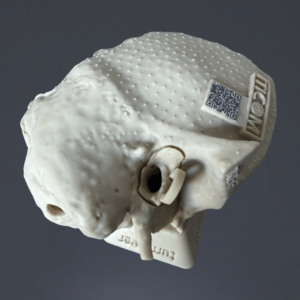
An anatomically accurate 3D simulation model designed for hands-on endonasal surgical training, including functional endoscopic sinus surgery (FESS). Its removable, replaceable cartridges replicate relevant sinonasal anatomy and enable repeated practice of surgical techniques. Additional cartridges can be purchased separately, providing a flexible, cost-effective training solution for surgeons and surgical trainees.
Otology
Price range: ZAR2,000.00 through ZAR3,900.00
ZAR 2000 | $130 | €120 | £100
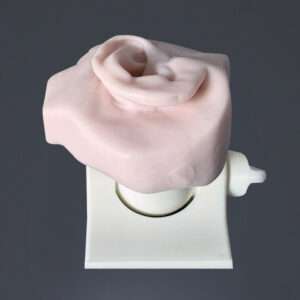
An anatomically detailed temporal bone simulation model based on a 64-year-old right ear, designed for hands-on otologic and neurotologic surgical training. It supports procedures including mastoidectomy, posterior tympanotomy, ossiculoplasty and subtotal petrosectomy. Features include realistic bone-drilling feedback, mobile ossicles, simulated soft-tissue responses and a removable tympanic membrane. An optional rotatable mount allows secure positioning during surgical practice.


Otology
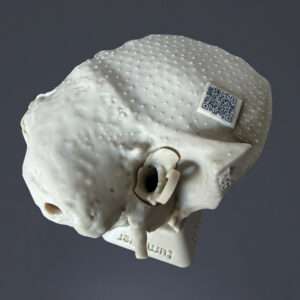
An anatomically detailed simulation model representing the temporal bone of a two-year-old child, designed for hands-on paediatric otologic surgical training. Available in MINI, MIDI and MAX configurations, it supports procedures ranging from middle ear surgery to mastoidectomy and cochlear implantation, depending on the configuration. Features include realistic bone-drilling characteristics and anatomical structures relevant to paediatric ear surgery.
Otology
Price range: ZAR2,600.00 through ZAR4,500.00
A compact, anatomically accurate temporal bone simulation model designed for otologic surgical training, including mastoidectomy, tympanoplasty and facial nerve decompression. It provides realistic tactile and acoustic drilling feedback, with an optional external soft-tissue ear for anatomical orientation. The model supports repeated surgical practice but does not accommodate cochlear implant electrode insertion, for which the Temporal Bone Ear MAX is available.
This product has multiple variants. The options may be chosen on the product page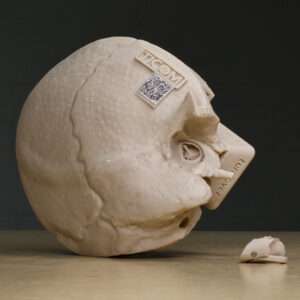
Otology
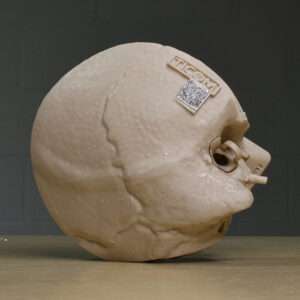
An anatomically detailed simulation model representing the temporal bone of a 64-year-old adult, designed for hands-on otologic surgical training. The Temporal Bone MAX supports procedures ranging from middle ear surgery to mastoidectomy and cochlear implantation, depending on the configuration. Features include realistic bone-drilling characteristics and anatomical structures relevant to advanced ear surgery.


Laryngology
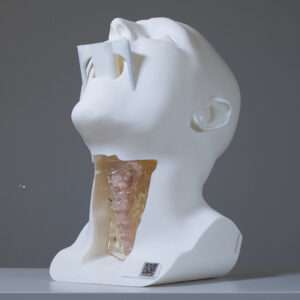
A modular, anatomically accurate 3D simulation model designed for hands-on airway training. It supports rigid and flexible bronchoscopy, suspension laryngoscopy and supraglottic airway insertion. Interchangeable tracheal sections simulate different levels of stenosis, allowing trainees to practise balloon dilatation and other airway interventions in a controlled training environment.
Products
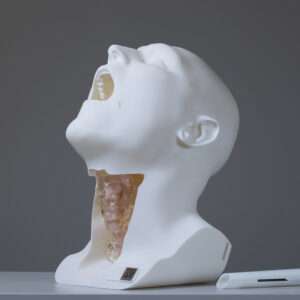
A portable, reusable surgical simulation platform designed for hands-on training in transoral and endoscopic laryngeal procedures. Its integrated suspension system, transparent laryngeal anatomy and interchangeable pathology inserts support training in endoscope navigation, instrument positioning and procedural techniques using rigid and flexible endoscopes, lasers, coblation systems and powered instruments.
Reviews
There are no reviews yet.